
.pngbb36.webp?h=a1ddd8a2&itok=fnJOI6Yh "Photo: Pradeep Gaur")
Featured Publications

This focus note explores innovative financing strategies for inclusive credit fintechs in Africa, identifying knowledge gaps and highlighting digital innovations in MSE credit markets.
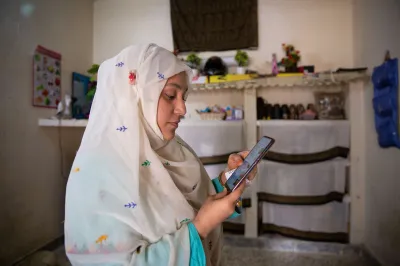
The use of transactional data for credit underwriting can play a part in closing the estimated US$4.9 trillion global financing gap for micro and small enterprises. This case study examines the data and experience of two fintechs in India that use different sets of transactional data for credit scoring.

This focus note outlines various business models that incorporate last-mile retailers into digital ordering platforms, offering them convenience, transparency, and a wide range of products.

This focus note features a range of case studies based on CGAP's research and highlights the potential and actual impacts of microenterprise fintech models.

Micro and small enterprises are a vital part of the livelihoods and resilience strategies of poor households across emerging markets. This deck reviews existing impact literature and identifies key knowledge gaps.
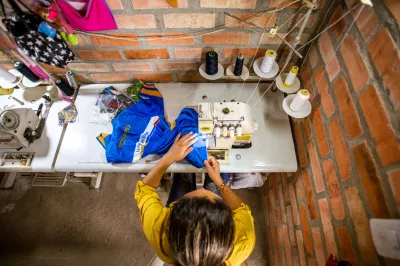
This paper is based on primary research conducted with 383 MSEs in India, Kenya, and Peru – three diverse emerging markets with a vibrant MSE finance ecosystem that includes strong incumbent providers like microfinance institutions, cooperatives, and banks, as well as innovative new providers like fintechs.
.jpg98cb.webp?h=d2336f69&itok=37Z5nxGX)
This reading deck highlights technological trends and fintech business models with high potential to reach underserved MSEs with improved and responsible financial services.
Featured Blogs

The growth of India’s fintech industry has historically been driven by digital payments, but now digital credit is poised to take the reins. But what is digital credit, and how can its regulation help narrow the credit gap for India’s MSEs?
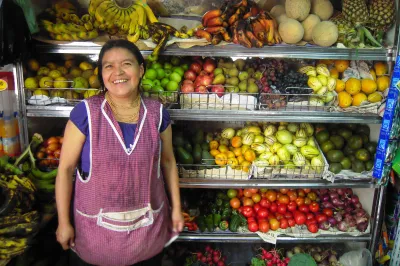
CGAP market sizing research in Peru found that fintechs are only responsible for 0.3% of the MSE credit market. Here, we ask why fintechs have such a small segment of the MSE credit market and posit how that share can be increased.
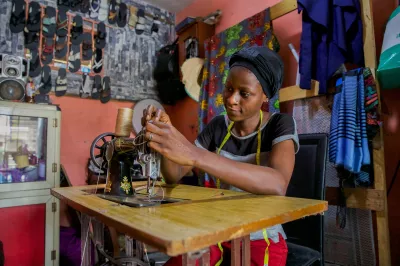
Findings from our recent research suggest BNPL is becoming a significant lending mechanism for Nigerians – especially for micro, small and medium enterprises and self-employed individuals who would not otherwise have access to credit.
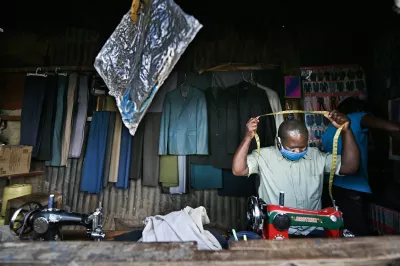
Kenya has seen an explosion of fintechs and nano credit providers, but they have yet to meaningfully serve MSEs in the country. We explain how fintechs could have a wider reach and distinct value proposition for MSEs in Kenya beyond digital credit.
.jpeg5f05.webp?h=de71ac43&itok=3pFREMGx "Photo: Karl Kariithi")
Lack of trust in formal financial service providers among MSEs (especially the smallest, poorest, and women-owned enterprises) is a looming concern. While technology offers hope, more needs to be done to gain the trust of customers at the last mile.

The debate over the impact of small business finance is far from settled. Here are four gaps in the evidence base that should be filled to move the debate forward.

MSEs in emerging markets are increasingly adopting digital technologies in ways that can increase their access to finance and deepen financial inclusion.
Featured Webinars and Podcasts

Despite efforts to expand MSE finance, the credit gap remains at US$4.9 trillion. New tech-enabled business models can break down traditional barriers but require funding and access to suitable early-stage funding is scarce. In this webinar, we will discuss the potential role of fintech incubators and accelerators in supporting early-stage fintechs and providing linkages to the investment community and more.
_1.jpgf989.webp?h=b1aca51b&itok=gi0ZHk3s)
CGAP’s Focus Note highlights the importance of segmentation of MSEs for designing relevant financial services and targeted support mechanisms, and identifies five salient dimensions of segmentation. Participants discussed the opportunities and challenges in effective segmentation.

In this webinar, experts discussed opportunities and challenges MSEs face in embracing digitization and how stakeholders in the financial inclusion community can support efforts to build trust in fintech providers.
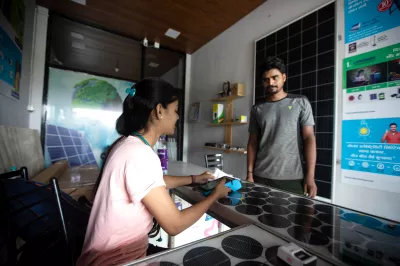
Over the past decade, it has become increasingly clear that when an MSE leverages financing to turbocharge its growth and increase profitability, it is the exception, not the rule.

Speakers presented findings from CGAP's demand-driven market sizing study of MSEs in Kenya, Nigeria, India and Peru.
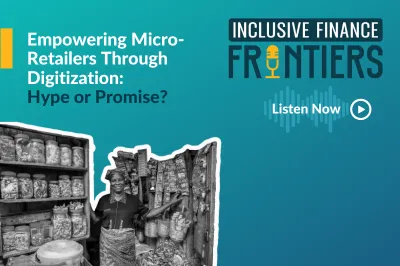
Micro-retailers that stock fast-moving consumer goods are universally cherished. And yet, they face numerous unique challenges. B2B e-commerce startups are promising to make a difference for these micro-retailers by digitizing order processes and extending buy-now-pay-later credit options. But challenges remain: How do we bridge the digital divide, and can these systems sustainably scale?
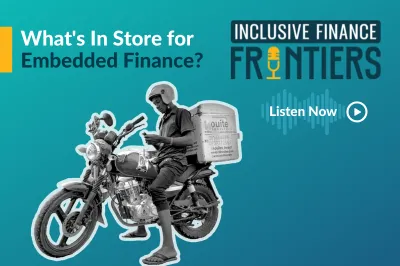
The spread of digital technology and infrastructure has given rise to fintech, but it’s also driven the popularity of non-financial services like social media apps, gig platforms, and e-commerce sites. “Embedded finance” refers to the integration of financial tools into this growing array of services. What forms will embedded finance take in the future? What are the biggest opportunities and risks and what players are driving it in different regions?